
Mechanical Systems Engineering
Want to rethink mechanical engineering and make your mark in the digital industry? In the international Mechanical Systems Engineering program, you’ll combine traditional engineering knowledge with IT skills such as AI and simulation. From day one, you’ll study entirely in English and prepare yourself for top jobs in the digital industry.

Profile
Degree
Bachelor of Engineering (B. Eng.)
Study Language
English
Standard period of study
7 Semester (inkl. 1 Praxissemester)
Starts of study
Winter semester
Application deadline
March 31 (resident outside the EU) / July 15 (resident within the EU)
Admission requirements
General or technical university entrance qualification, technical college entrance qualification,
APS (for applicants from China, India, and Vietnam)
Language requirements
TOEFL iBT 79 or IELTS 6.0
ECTS
210 Credits
Place of study
Campus Offenburg
Selection process
Yes (NC)
Everything You Need to Know
Course Content
The industry is evolving and looking for doers who think digitally. Today, there is a demand for experts who combine technical knowledge with skills in computer applications, simulation, data analysis, artificial intelligence, and machine learning. We prepare you for exactly that.
This program is right for you if you…
come from abroad, have a good command of English, and want to work in German industry. Because that’s where engineers are needed. So, top career opportunities await you.
are from a German-speaking country and are looking for a program that gives you an international edge. An English-language degree is a real career booster!
are looking for a combination of mechanical engineering and digitalization. Your entire program is focused on simulation, data analysis, computer applications, and modern engineering tools.
Here’s what it’s all about:
Understanding technology: In the first semesters, you’ll learn the engineering basics—such as mathematics, materials science, mechanical engineering, electrical engineering, programming, and design & CAD—as tools for your ideas.
Specialization & applying: Starting in the 3rd semester, you’ll directly apply modern virtual engineering methods such as simulation and data analysis. You’ll master mechatronics, use digital tools for mechanical engineering, and add future-oriented skills like AI and digital engineering to your repertoire.
Set Your Own Focus: You’ll refine your profile through required electives and decide in which areas you want to become an expert.
Communicate without borders: While international students learn German (from beginner level A1 to the B2 certificate), German-speaking students choose additional foreign languages or pursue specialization in elective courses. This way, you’re all ready for a global career and can pursue specialization in areas that interest you.
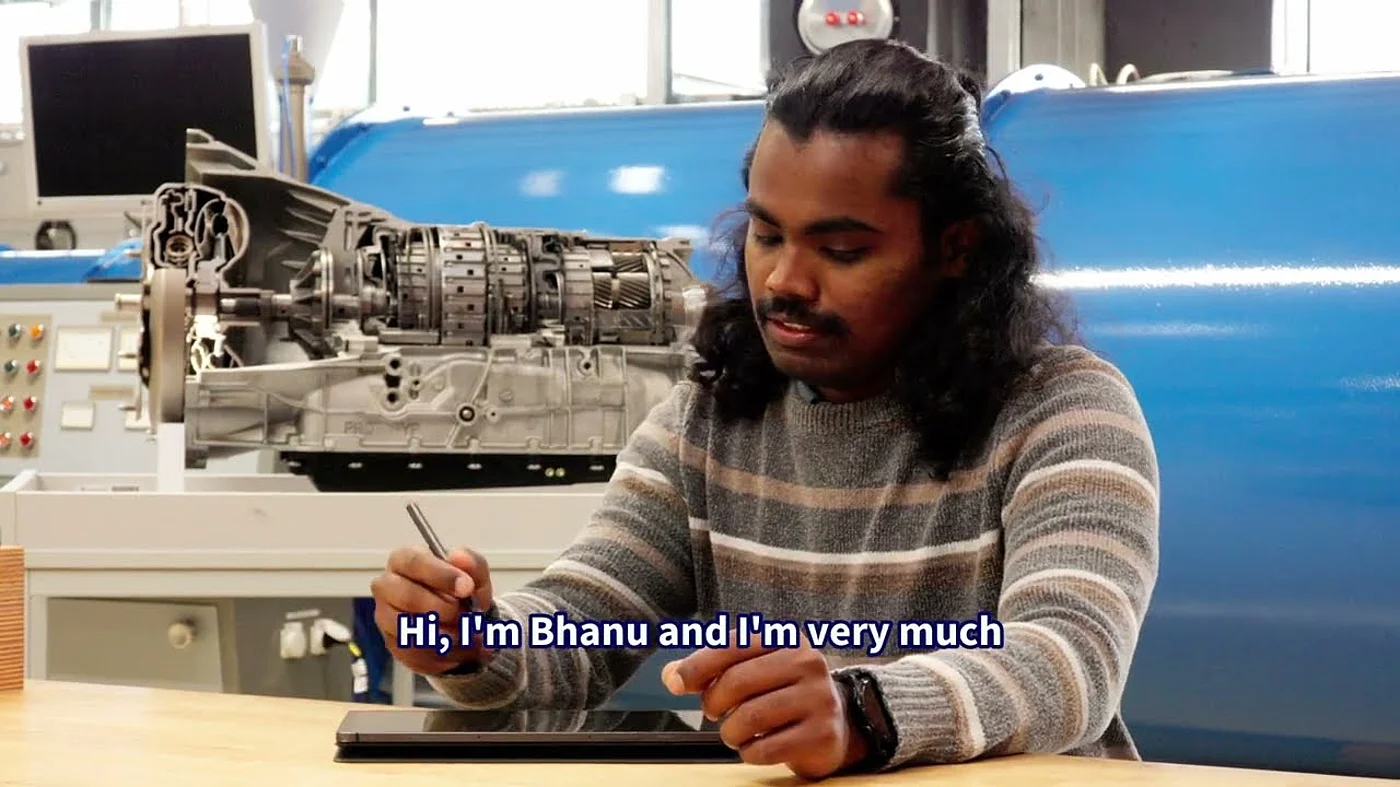
Theory in action: In small groups, you’ll work directly in our many teaching and research labs. Whether it’s the humanoid robot Sweaty, the efficiency marvel Schluckspecht, or the BFFT’s electric race car, knowledge comes to life here.
Hands-on experience: You’ll spend your 5th semester directly in industry. You’ll also typically write your bachelor’s thesis in the 7th semester at a company, allowing you to build valuable industry contacts even while you’re still a student.
Perspectives
After 7 semesters, you’ll be ready to enter the workforce. As an MSE graduate, all doors are open to you—especially in the thriving industrial sector of the German-French-Swiss region.
You’ll be in demand wherever innovative products are developed, designed, or manufactured. Your in-depth digital engineering expertise helps companies boost productivity, and you’ll work on exciting future-oriented topics such as sustainability, climate protection, energy and food supply, medical technology, and smart mobility.
For example:
Develop sustainable mobility and zero-emission powertrains.
Design smart medical technology or innovative communication systems.
Bring industrial design and production into the digital future.
Take charge of projects, lead teams, or manage technical sales.
Want more? After earning your bachelor’s degree, you can directly enroll in one of our master’s programs (e.g., Master of Mechanical Engineering or Master of Digitale Technologien im Maschinenbau) and pursue a specialization.
Applying from abroad (without a German university entrance qualification)
Don’t have a German high school diploma but want to study with us? Have your documents reviewed by the Studienkolleg Konstanz (STK) or uni-assist. Once you have the certificate, you can apply directly to us for your desired bachelor’s program.
FAQ – what you should know
Fees and Cost
What tuition fees apply?
Non-EU students: €1,500 per semester
EU students pursuing a second Master’s in Germany: €650 per semester
Graduate School Service Contribution (for all English-taught Master’s programs): €150 per semester
Semester Fees: €170 per semester
What does the Service Contribution cover?
The Service Contribution supports student services such as:
Liability insurance
Assistance with housing
Buddy program support
Excursions and social events
How much are living costs in Offenburg?
The average monthly living cost is around €992. Typical expenses include:
Rent: ~€430
Food: ~€275
Health insurance: ~€132
Study materials and transport: ~€155 combined
Should I bring money when I arrive?
Yes. Initial expenses such as first month’s rent, deposit, and insurance may require immediate payment, and international bank transfers can take several weeks.
Before Arrival
Do I need a visa?
Students from non-EU countries must obtain a student visa. A tourist visa is not sufficient. Apply approximately three months before arrival.
Do I need to prove financial resources?
Yes. You must demonstrate you can cover your living expenses, approximately €11,904 for the first year. This can be done via a blocked account, scholarship, or proof of savings.
Is health insurance required?
Yes, all students must have valid health insurance for enrollment. You can use German student insurance or a recognized international plan.
After Arrival
What should I do immediately after arriving in Offenburg?
Complete enrollment at the university to receive your student ID (“OSKAR”) and login credentials.
Open a German bank account for rent, insurance, and other payments.
Confirm health and liability insurance coverage.
Register your address at the town hall and visit the immigration office for a residence permit if required (non-EU students).
Pay the broadcasting fee (€18.36 per household per month).
Is there an orientation or welcome program?
Yes. All new students are invited to orientation sessions, including a special introduction for international students. This provides an opportunity to meet peers and become familiar with the university before classes begin.
Is there support before arrival?
Yes, the university provides a Buddy Program to connect incoming students with current students who can help with housing, paperwork, and settling in.
Services
We are dedicated to fostering a welcoming atmosphere to ensure you have a successful and enjoyable time at Hochschule Offenburg. Here are some of the key services we provide:
Impressionen aus dem Studium


Contact Persons

Downloads (coming soon)
- Academic Regulations (PDF)
- Module Handbook (PDF)
- Qualification Objectives/Competency Matrix (PDF)