
Biomechanik
Technology that moves people: In the Biomechanik program, you’ll combine engineering, medicine, and sports. You’ll develop smart implants, optimize prosthetics, and analyze movement patterns in professional sports. Your knowledge will translate into a better quality of life—through solutions that make a real difference in everyday life and in sports.

Profile
Degree
Bachelor of Engineering (B. Eng.)
Study Language
German
Standard period of study
7 Semester (inkl. 1 Praxissemester)
Starts of study
Winter semester
Application deadline
September 18
Admission requirements
General or technical university entrance qualification, technical college entrance qualification
ECTS
210 Credits
Place of study
Campus Offenburg
Hast du Fragen zur Bewerbung oder zur Einschreibung?
Das Team vom Zulassungsamt hilft dir gerne weiter:
E-Mail: zulassungsamt@hs-offenburg.de
Telefon: 0781 205-4792 (Mo bis Do 09:00–12:00 Uhr, Di von 13:00–15:00 Uhr)
Vor Ort: Raum: A 007
Everything You Need to Know
Course Content
With a bachelor's degree in Biomechanik, you will learn to understand the human body as a highly complex system and to provide technical support for it.
Your program combines traditional engineering knowledge with a passion for sports and health.
Your path through the program:
Understanding mechanisms: Through Engineering Mechanics, Statics, and Kinetics, you’ll delve into the forces acting on the body and supporting systems. A central part of your studies is working at the IBMS—one of Europe’s largest and most modern biomechanical labs. Here, you’ll use high-end equipment such as 3D motion capture systems and force plates to scientifically analyze movement patterns in competitive and recreational sports as well as rehabilitation. You’ll also have access to scanning methods, 3D printers, and materials testing equipment.
Specialization: Choose Your Focus
Starting in the advanced study phase, you’ll deepen your knowledge in promising specializations that perfectly combine technology and sports:
Sports, Orthopedic, and Ergonomic Technology: Here, you’ll develop solutions for the human-machine interface. Whether it’s innovative prosthetics, orthoses for rehabilitation, or the ergonomic design of high-tech sports equipment—you’ll ensure that technology supports and protects human performance.
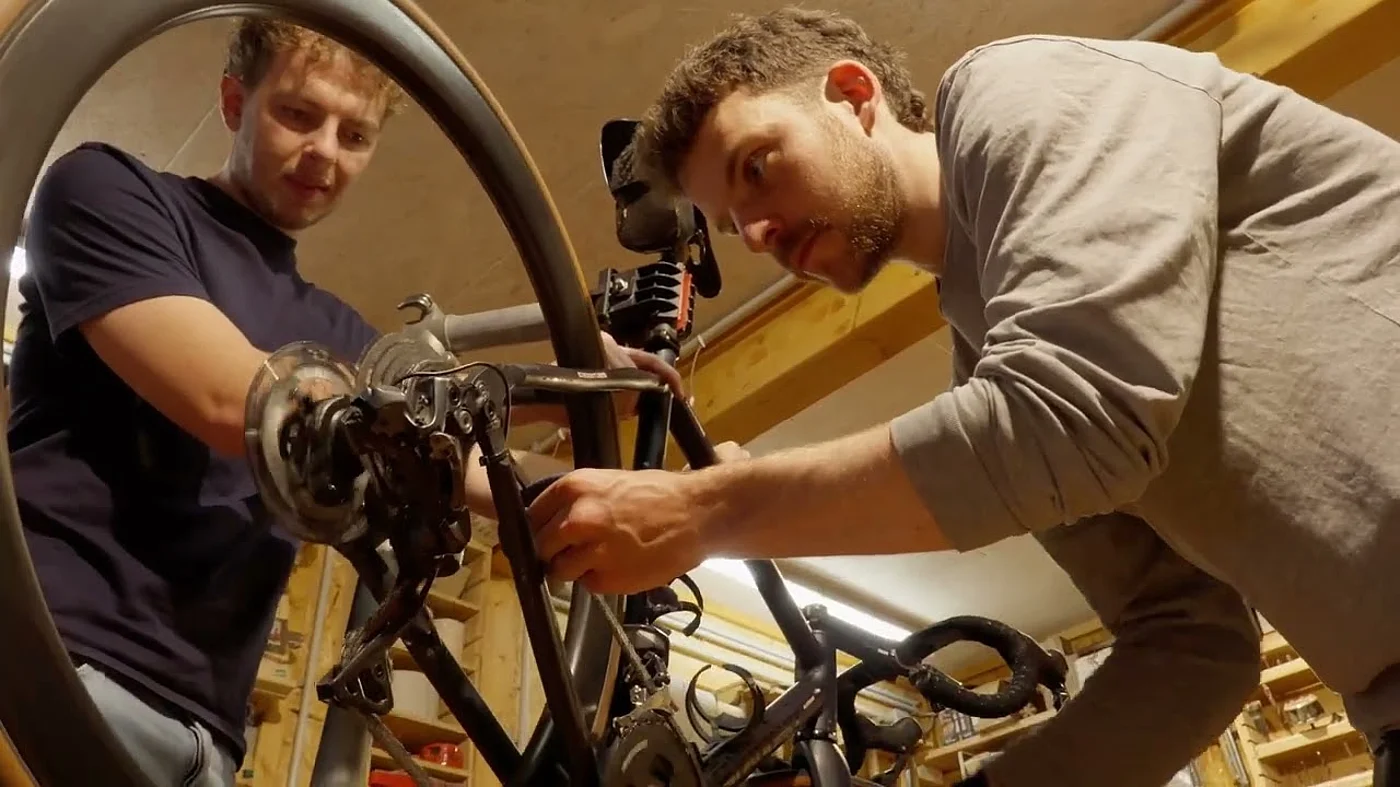
Bicycle Technology: Become an expert in modern mobility. This specialization focuses on bicycle dynamics, aerodynamics combined with ergonomics, and performance diagnostics. You’ll learn the fundamentals of lightweight construction for high-performance and e-bikes, as well as biomechanical interaction with the human body.
Designing solutions & optimizing systems: To actually build biomechanical systems, you’ll use engineering tools such as CAD and structural optimization applications, as well as simulation methods. You’ll work with innovative and 3D-printed materials and learn how to improve complex processes using numerical methods. Since your developments will directly support people later on, engineering psychology rounds out your profile.
Real-world challenges: You’ll spend your practical semester at a company of your choice—ranging from global players in the sporting goods industry to specialized medical technology firms. In the final biomechanics project, you’ll apply your knowledge to real-world problems: from enhancing performance in elite sports to optimizing bicycle components and designing ergonomic workplaces of the future.
Perspectives
Biomechanical engineers bridge the gap between technology and people. Your advantage: You have a solid technical foundation combined with knowledge of human biology. This opens up many opportunities in growing markets:
Medical technology or rehabilitation companies: You develop smart implants or technical aids that make everyday life easier.
Sports and exercise science: In industry or research centers, you analyze movements and enhance athletes’ performance.
Ergonomics: You design products and workstations that are perfectly suited to the human body—for example, in the modern bicycle industry.
Healthcare interface: You’ll also apply your technical knowledge in physical therapy or rehabilitation centers to measurably improve therapies.
You can work in research, development, quality assurance, or sales. And you’ll use your skills to support people and improve their quality of life.
Bewerbung
So schreibst du dich ein
An der Hochschule Offenburg sind viele Bachelor-Studiengänge und das Einstiegssemester startING zulassungsfrei (ohne NC). Das bedeutet für dich: Wenn du die Voraussetzungen erfüllst, gehört der Studienplatz dir.
Hier erfährst du, wie du dich schnell und einfach in einen unserer zulassungsfreien Studiengänge einschreibst. Eine Registrierung bei Hochschulstart ist dafür nicht nötig.
Einschreibezeitraum: 29. April 2026 bis 18. September 2026
Ein kleiner Tipp: Je früher du deinen Antrag auf Immatrikulation (Einschreibung) stellst, desto entspannter startest du in dein Studium. So ist rechtzeitig zum Vorlesungsbeginn alles für dich vorbereitet.
Schritt 1: Online einschreiben
Fülle einfach das Online-Formular aus und schicke es digital ab. Drucke danach den Antrag auf Einschreibung und die Datenschutzerklärung aus und unterschreibe beides.
Schritt 2: Unterlagen einsenden
Sende uns den unterschriebenen Antrag und die unterschriebene Datenschutzerklärung zusammen mit den weiteren Dokumenten per Post zu. Welche Unterlagen wir genau brauchen, siehst du direkt im Antragsformular oder in der Checkliste (PDF).
Bitte schicke die Unterlagen an folgende Adresse:
Hochschule Offenburg
Zulassungsamt
Badstrasse 24
77652 Offenburg
Wichtig: Denke bitte daran, vorab einen Orientierungstest zu machen. Den Nachweis legst du einfach deinen Unterlagen bei. Mehr Infos dazu findest du hier Studienorientierung
Schritt 3: Start-Unterlagen erhalten
Sobald alle geforderten Unterlagen und der Semesterbeitrag pünktlich bei uns eingetroffen sind, schreiben wir dich an der Hochschule Offenburg ein. Damit ist alles erledigt: Dein Studierenden-Account wird aktiviert und dein Bewerber-Account automatisch geschlossen. Deine Zugangsdaten für die Online-Dienste der Hochschule schicken wir dir kurz darauf per Post zu.
Alle Details zum 1. Tag auf dem Campus findest du kurz vor Semesterbeginn hier Studienstart
Schritt 4: Zu den Vorkursen anmelden
In den 2 Wochen vor Vorlesungsbeginn finden Vorkurse in Mathe, Physik und Informatik statt. Nutze diese Zeit, um dein Wissen aufzufrischen und erste Kontakte zu knüpfen.
Checkliste (PDF)
Einschreibung Bachelor zulassungsfrei bzw. startING (ohne NC)
Dein aktueller Stand
Nachdem du deine Online-Einschreibung abgeschickt hast, kannst du dich jederzeit im Online-Portal einloggen und nachsehen, wie weit wir mit der Bearbeitung sind. Dort erfährst du auch, falls wir noch etwas von dir brauchen.
Bewerbung in höhere Fachsemester / Quereinstieg
Hast du Fragen zur Bewerbung oder zur Einschreibung?
Das Team vom Zulassungsamt hilft dir gerne weiter:
E-Mail: zulassungsamt@hs-offenburg.de
Telefon: 0781 205-4792 (Mo bis Do 09:00–12:00 Uhr, Di von 13:00–15:00 Uhr)
Vor Ort: Raum: A 007
Highlights from the study program


Hast du Fragen zur Bewerbung oder zur Einschreibung?
Das Team vom Zulassungsamt hilft dir gerne weiter:
E-Mail: zulassungsamt@hs-offenburg.de
Telefon: 0781 205-4792 (Mo bis Do 09:00–12:00 Uhr, Di von 13:00–15:00 Uhr)
Vor Ort: Raum: A 007

