27
Oct
Our interdisciplinary media studies programs are designed to provide students with up-to-date, practice-oriented content in the fields of media design, media technology, media business administration, and media informatics.
Our building, constructed in 2009, houses the entire department. It features lecture halls of various sizes, labs, and studios—all equipped with state-of-the-art technology—as well as offices for staff and faculty. Here, we design, produce, and conduct research on media.
An institution of higher education relies on its projects and the research associated with them. The Department of Media and Information Studies offers a wide range of degree programs that cover various media topics. These programs are designed to be practice-oriented, integrating real-world applications into both research and student projects.
At one end of the spectrum is artistic research with interactive media. On the other hand, the field of IT security has become increasingly crucial due to the growing importance of technology in our daily lives. Our department is dedicated to a wide range of projects, including those in the field of visual product implementation, as well as media management, media informatics, and media technology.
The department's interdisciplinary structure allows for the examination of numerous challenges and projects from various academic viewpoints simultaneously. The business community also benefits from the insights gained through research, as it can adopt and incorporate these ideas and innovations into its products.
The research topics in the department of Media and Information Studies are extremely diverse. They span the four key areas of media technology, media informatics, media management, and media design. Current research areas include:
Mobile Computing
Mobile and E-Learning
IT Security
Photonics
Media Economics
Media Art and Media Design
Media Didactics and Media Education
Marketing for Small and Medium-Sized Enterprises
Usability/Eye Tracking
Start-ups
Research is conducted as part of externally funded projects in collaboration with affiliated universities, research institutes, and industry partners, as well as through student projects.
THINK NEW is an innovation network founded under the leadership of Prof. Dr. Rohbock. This unique initiative aims to connect various organizations from the business, cultural, and social sectors with students in the Department of Media. The focus is on developing creative ideas and forward-looking innovation concepts for established companies, public institutions, and startups.
More information about THINK NEW is available on the project website: thinknew.hs-offenburg.de
Claudia Schmidt
Volker Sänger
Ongoing Project
Everyone is talking about media. We speak of a media society, of the media as the fourth estate, and of new media that are increasingly permeating our everyday lives. From a technical perspective, digital technologies and media are part of a long evolutionary process. In terms of content, however, we still face the same challenges: facilitating media-based communication, presenting content in a way that is appropriate for the medium, the target audience, and the times, and conveying information and messages to our communication partners. Whether verbal or visual, analog or digital, direct or indirect: as always, we’ve got the technology “under control” relatively quickly; the crucial questions regarding humans as producers and recipients of media, however, remain unresolved. To address this, we must raise and discuss questions regarding content and functionality, but above all, aesthetic and ethical issues.
Specific aspects:
Theory and practice of cross-media communication theories and visualization concepts
Media-supported communication in the context of historical and technical developments
Media in teaching: the integration of media into pedagogy and media-critical discourse
Artistic forms of expression in and with new media/media art
Book Publications (dpunkt, Heidelberg)
Communication and Visualization: Fundamentals of Media Design (to be published in mid-2006)
Project Management for Print and Digital Media (to be published in mid-2007)
Location:
Hochschule Offenburg – Department of Media, Badstraße 24, 77652 Offenburg
More information:
https://www.instagram.com/medienfakultaet.offenburg

July 24, 2026 – Department of Media, Offenburg Campus
The Student Exhibition opens its doors at the end of the summer semester on Friday, July 24, 2026, starting at 2:00 p.m.! The Student Exhibition is an annual event where students present the projects they’ve been working on for several months. In addition to musical entertainment, all kinds of exhibited works, and film screenings, there will once again be an Artist Alley where students can sell their own creations! To bring the summer semester to a wonderful close, music will of course be playing late into the night—what would a summer festival be without a party atmosphere? ;)
Special for high school students: Lab tour and direct interaction with students from all media studies programs
Free admission—come by and see what media students have been up to!
PROGRAM:
9:00 a.m.–1:00 p.m. Presentation of project work (D001 & D015)
2:00–5:15 p.m. Colloquium (D015–D016 & hallway)
Starting at 2:00 PM Exhibition, food & drinks (D Building)
2:00–6:00 p.m. Artist Alley (university cafeteria)
2:00 p.m. Movie Quiz (D001)
Starting at 2:00 p.m. Small Theater (D012)
Starting at 4:00 p.m. Music & Live Performance by zycon (Lawn & Ramp Stage)
5:00 PM MOVIE (D001)
8:00 p.m. Exhibition & AStA student union Party (Open Air Campus)

The department maintains a wide range of industry contacts. Here is a list of selected companies with which we have long-standing partnerships:
Hubert Burda Media, Munich / Offenburg
Markant Handels und Service GmbH, Offenburg

Associate Dean for Academic Affairs and Teaching


Dean's Assistant - departmental office

Prof. Dr. rer. nat.


Here you will find the labs of the Media and Information Studies department, where courses for our students are held and applied research is conducted. Please select the lab you would like to learn more about from the list below.
Room 105
Responsibilities and Objectives
Live Event Broadcasts and Recordings
Setup of production switchers, video mixers, audio mixers, playout servers, cameras, intercom systems, networked systems, and lighting
Live video and audio editing
Technical planning of events
Research and Development
IP-based video transmission
Audio transmission over IP (AES67, Dante)
Integration of various systems
Network design for broadcast systems
IP Multicast Applications
Sustainable video production control room with an energy concept
Facilities and Technology
4K HDR IP-capable live production control room compliant with TV broadcast standards
IP Broadcast System with IP Stagebox and 2 SDI Switches.
Air-conditioned room with a viewing window overlooking the studio floor
Space for a video mixer operator, audio engineer, director, camera operator, video engineer, and playout operator
Room D205
Communication over the Internet has become an integral part of our daily lives. Networks are becoming increasingly powerful and offer a wide range of new applications such as social media, streaming, and Voice over IP.
In the Computer Networks lab, students gain hands-on experience with protocols used in local networks and the Internet. This includes current developments in the context of the Internet, such as communication via IPv6, newer protocols like QUIC (Quick UDP Internet Connections), and streaming via DASH (Dynamic, Adaptive Streaming over HTTP).
Projects
KompiLe – Promoting AI Competence, Supporting Individualized Learning
The KompiLe project, funded by the federal-state program “Artificial Intelligence in Higher Education,” investigates the use of artificial intelligence (AI) in teaching.
A particular challenge of AI-supported technologies lies in balancing technical, ethical, social, and legal aspects and, on this basis, finding optimal solutions for higher education.
KompiLe directly links learning with AI to learning about AI, thereby enabling a reflective, AI-supported learning process. The project is based on the assumption that the design and use of AI-based learning offerings require AI literacy on the part of both instructors and learners, while also fostering it.
MI-Learning
E-learning lessons on the subjects of software engineering, computer networks, and databases. The lecture content is explained, and interactive exercises and quizzes support the learning process. All lessons are continuously refined by the MI-Learning team.
Chatbot Sophia
In the Computer Networks lab, groups often ask similar questions. For these FAQs, a prototype chatbot was developed based on AIML (Artificial Intelligence Markup Language) that can answer students’ FAQs. The chatbot is now in use in the lab and is being further developed based on the questions asked.
Gamification in Moodle
The first Moodle courses have been gamified—based on a variety of exercises with feedback, gamification elements such as leaderboards, progress bars, and various rewards have been integrated into the courses. Students learn through the exercises and are motivated by the gamification elements to continue engaging with the content.
IPv6
The IPv6 lab offers the opportunity to gain hands-on experience with IPv6. Topics include network configuration under IPv6, comparisons between IPv4 and IPv6, and SLAAC (Stateless Address Autoconfiguration).
evoNet is the result of a project that presents the development of the Internet—from ARPANET to today’s World Wide Web—in a clear and engaging way.
Room D205


Tasks and Goals
Modern IT is no longer conceivable without databases; virtually every application processes its own data sets and thus—whether visibly or invisibly—uses one or even several databases. On the World Wide Web, databases are the indispensable resource that provides up-to-date, dynamic, and increasingly multimedia content. Artificial intelligence—currently the subject of intense discussion—and its subfield, machine learning, rely on large volumes of available data, as artificial intelligence learns from example data.
The Databases Lab has set itself the goal of conducting practice-driven teaching and research in the field of databases, particularly with regard to e-business, multimedia content, and machine learning.
Projects
MI-Learning
MI-Learning is an interactive online learning environment for the subjects of software engineering, databases, and computer networks. It contains facts, exercises, and videos for self-paced learning. MI-Learning is a featured project on e-teaching.org and at the Virtual University of Baden-Württemberg. Especially during the era of online teaching, MI-Learning has been more important than ever. We are continuing to expand the environment and analyze its impact.
KompiLe – Promoting AI Competence, Supporting Individualized Learning
The “KompiLe” project, funded by the federal-state program “Artificial Intelligence in Higher Education,” investigates the use of artificial intelligence (AI) in teaching.
KompiLe directly links learning with AI to learning about AI, thereby enabling a reflective, AI-supported learning process. The project is based on the assumption that the design and use of AI-based learning offerings require AI literacy on the part of both instructors and students, while at the same time fostering it.
As part of the project, the University’s Moodle e-learning system is being expanded into a so-called Learning Experience Platform (LXP) using custom-developed plug-ins. This platform supports self-directed learning with AI elements that provide students with personalized learning recommendations.
MachineLearn-ING – Machine Learning for Users in the Engineering Sciences
Hochschule Offenburg has a growing continuing education sector that currently comprises five master’s programs as well as certificate courses. The university is integrated into numerous regional networks, some of which are explicitly focused on digitalization and continuing education. These networks are being utilized for the MachineLearn-ING pilot project to encourage working high-level professionals to pursue continuing education. The technical focus of MachineLearn-ING is machine learning, which is considered a key driver of innovation for digitalization. The organizational structure of the continuing education course is tailored to the target group’s tight schedule.
The project thus serves as a model case for reaching specific target groups with the future-oriented qualification programs of the World of Work 4.0.
People Learn Machine Learning (ML2)
is a research project that brings together companies and students to first understand the concepts and methodologies of machine learning and then jointly carry out projects related to machine learning. The results of the project are incorporated into a continuing education program that began in the 2019–2020 winter semester.
Multimedia Databases and AI
Metadata containing information about the stored media files is used for content-based searches in image, audio, and video data. In recent years, machine learning methods—specifically deep learning—have been used to automatically extract such metadata from media data. We apply these concepts and investigate their quality in specific applications.
Hardware
Approx. 20 client computers (Linux/Windows, either PCs or laptops), several workstations with NVIDIA graphics cards for AI training, database server (Linux), web server (Linux)
Software
DBMS: Oracle, MySQL, MongoDB
Programming: Java, JSP, PHP, JavaScript, and HTML5
Data analysis with RapidMiner, KNIME, R, and Python
AI: Orange, Python with various libraries
Tools provided via the BWLehrpool
Room D203
Tasks and Goals
The Internet, as a distributed information infrastructure, is ubiquitous. Many applications are implemented based on the World Wide Web (WWW), which is designed specifically to facilitate interaction with users. A key focus of the Interactive Distributed Systems lab is teaching in the field of web development.
For many years, the Internet has provided information, services, and applications based on digitized data. For some time now, physical objects have also been equipped with digital communication capabilities and integrated into the world of the Internet. The world as experienced by humans is merging with its digital representation on the Internet: the so-called “Internet of Things” (IoT) is emerging. This constitutes the second focus of teaching in this lab.
Laboratory Equipment
From the soldering station to the collection of electronic components and accessories, right through to the project prototypes that have been created, the lab’s equipment—in line with the lab’s main areas of focus—closely resembles that of a small maker workshop.
The six spacious lab workstations are each equipped with the latest software and hardware for Arduino and Raspberry Pi lab experiments. As a result, they are frequently used by project groups.
Thanks to its close ties with the department’s IT department, the lab also has an extensive inventory of computers, hardware, and peripherals.
Tasks and Goals
In our IT security lab, we conduct exercises, projects, and “Capture the Flag” competitions. In the lab, students learn to identify vulnerabilities in software, networks, and computer systems and to fix them. The topics covered include
reverse engineering
Linux
Web application penetration testing
Steganography
SQL injection
Cryptography
IT Forensics
Programming
Network Security
Facilities
In addition to 20 workstations, each accommodating two students, the lab is equipped with a wide range of specialized hardware and software (KALI Linux, dedicated VMs, forensic tools, Raspberry Pis, keyloggers, …).
Room 113


User-friendly and needs-based information presentation is at the heart of media communication. Since its founding in 2002, the Media Research Lab has been able to assess companies’ current status in this regard and identify practical recommendations for innovative development. To this end, it employs modern eye-tracking techniques and market research methods.
Key Areas of Focus
Eye Tracking
Eye tracking is at the heart of the lab work. Various eye-tracking techniques are employed. With their help, visual focal points when viewing a test object can be made transparent. In combination with quantitative or qualitative survey methods, the observations made provide insight into conscious and unconscious information processing within a selected target group.
Market Research
Decision-makers need relevant information. The Media Research Lab collects and analyzes this information through a systematic process based on scientific methodologies of empirical market and social research. Analyses, surveys, and experiments must be individually developed for each research topic and combined in a targeted manner. Through objective market observation, success potentials related to target groups and competitors become apparent, forming the strategic foundation for operational decision-making.
Innovation
The work at the Media Research lab is characterized by an interdisciplinary and empathetic approach. This makes it possible to simultaneously understand the different perspectives of the stakeholders involved in a company’s innovation process. Above all, people are at the center of all recommendations for action, enabling us to identify optimization potential based on previously undiscovered needs.
Areas of Application
Information—both offline and online—is increasingly conveyed visually. Eye-tracking can therefore be used with nearly all media communication systems and advertising messages to measure success in terms of usage and perception. Drawing on many years of experience, the Media Research Lab at Hochschule Offenburg has specialized in the following research areas:
Web Usability Testing
Mobile Usability Testing
Software Testing
Prototype evaluation
Reception research
User Experience Research
Advertising Effectiveness Research
Point-of-Sale Market Research
In particular, the following research questions can be specifically addressed using eye-tracking:
Which pieces of information are actually noticed?
In what order is information perceived?
Which pieces of information are perceived with particular intensity?
Depending on the research topic, different requirements and specifications apply to the eye-tracking environment and technical equipment. Freedom of movement and the lab environment are just a few of the parameters that must be individually adjusted. The Media Research Lab is flexibly equipped for this purpose and can be deployed on-site.
Laboratory Equipment
Facilities
The Media Research Lab provides a welcoming and familiar environment for applied research and teaching. This creates a relaxed atmosphere for potential test subjects and collaboration partners. In addition, 25 workstations are available for students to use for research and analysis purposes.
Hardware and Software
For eye-tracking hardware and software, we rely on high-quality and innovative technologies from Tobii and SMI. The technical equipment available includes a stationary remote eye-tracking device and portable eye-tracking glasses.
Remote Eye-Tracking Device (RED)
The RED system is used as a stationary desktop device. An infrared camera is integrated into the participant’s monitor, which records eye movements without physical contact. In a laboratory setting, this allows for the creation of a usage situation that is as natural as possible, with minimal impact on the participants’ usual behavior. The system is particularly well-suited for research in the areas of web usability, user experience, the effectiveness of online advertising, and software testing. Accordingly, the RED is best suited for studies in which it is sufficient for the participant to view objects without requiring much freedom of movement.
Eye-Tracking Glasses
Eye-tracking glasses can be used anywhere and have virtually replaced earlier helmet-based systems. The compact system is highly comfortable to wear, ensuring realistic user behavior in mobile research settings. High-performance cameras simultaneously record the test subject’s eye movements and the scene being viewed. As a result, the glasses are particularly well-suited for research involving mobile devices or print media, in multi-screen scenarios, and at the point of sale.
Tasks and Objectives
Design and development of interactive, multimedia applications for the target platforms
Web, desktop, and mobile
Mobile devices (apps for smartphones and tablets)
DVD, Blu-ray Disc
Research and development in areas such as
cognitive effects of the parallel reception of media content presented simultaneously or alternately in a multimedia context
The use and impact of interactive multimedia content in the field of e-learning
advanced forms of interactivity
touchless, gesture-controlled input options
Interaction design
User Interface Design
Usability
User Experience Design
Conducting courses, seminars, projects, exercises, and tutorials in areas such as
Media Integration
Multimedia Production
Computer Graphics
Digital design
Print design and layout
Facilities
The Media Integration Studio is divided into three areas
large multifunctional room (called StudioM)
a separate room for advanced projects in small groups (called the Production Suite)
Office and Resource Room
The layout of the space allows the multifunctional room (StudioM) to be used for plenary events, such as lectures or workshops, as well as for seminar-style group work and individual exercises.
At the same time, advanced projects in small groups, as well as research and development initiatives, can be carried out undisturbed in the separate, partitioned room (Production Suite)
Equipment
Hardware
18 Macintosh-based workstations, 1 lecturer workstation, extensive peripheral equipment for capturing, editing, and outputting multimedia assets (scanners, graphics tablets, burners, printers, HD video cameras, HD projectors, HD TV monitors, microphones, and audio recorders, etc.).
A separate production suite with 2 MacPro systems as well as iMacs and professional equipment for HD video capture and editing, asset capture and editing, DVD and Blu-ray disc authoring and production, and web and mobile web content editing and programming.
Extensive inventory of mobile equipment (cameras, audio recorders, microphones, tripods, lighting kits, etc.) available for loan.
Software
Serif Affinity Suite, DaVinci Resolve, Sony DoStudio, Klynt, Max6, as well as various other professional media software and common open-source tools.
Room A009
“The term ‘media ecology’ refers to the study of environments—their structure, content, and impact on people.” Neil Postman, 1971
Ambient technologies such as smartphones and VR headsets create new types of environmental relationships between people, nature, and technology. In the Media Ecology lab (LME) at Offenburg University, we investigate these configurations in theory and practice through textual work and media-based experimental setups. The students design and implement experimental systems which reveal possibilities for action within the context of artistic research practice.
Our work focuses on spatial installations and interactive film applications, which are creatively developed through the three phases of conception, production, and reflection. By teaching theoretical and practical fundamentals in the fields of media art, media studies, media informatics, graphics programming, and physical computing, we support and guide students’ explorations. Depending on the field of application, sensor data from the immediate environment, data from the Internet, or generative values are utilized.
The development of these applications is guided by a media-phenomenological approach, in order to artistically explore the designed ecologies. The focus is on questions of environmental education, transmediality, and interaction.
DE\GLOBALIZE (2015–2025) – A Media-Philosophical Quest for the Terrestrial
DE\GLOBALIZE is an artistic research cycle spanning a decade and several continents. Media-ethnographic interventions in India, Egypt, the Congo, and the Upper Rhine region explore the interconnections between climate change, energy, social inequality, and migration.
In cooperation with the Indian Institute of Science in Bangalore, the German University in Cairo, the Kinshasa Academy of Fine Arts, and the universities of Freiburg, Mulhouse, and Strasbourg. The extensive interactive web archive can be found at http://deglobalize.com
Clim'Ability Care (2023–2026) & Clim'Ability Design (2019–2023) — Interdisciplinary Research Project on Climate Change in the Upper Rhine Region
Clim'Ability Design (2019–2023)
From 2019 to 2022, the Media Ecology lab was part of the interdisciplinary and transnational research project Clim’Ability Design (Interreg V Upper Rhine). The project’s goal was to identify climate change-related risks and opportunities for small and medium-sized enterprises in the Upper Rhine region. The project aimed to support these businesses in adapting their development strategies to future climatic and socioeconomic conditions. This was achieved through the use and exchange of information, experiences, and other forms of knowledge acquisition and communication.
With JARDIN GLOCAL as part of Clim’Ability Design, the Media Ecology Lab embarked on a media-ecological exploration of the terrestrial realm, focusing on “Matters of Care” in the Upper Rhine region. From “matter” and “materia,” through “Mater” (Mother Earth), to the garden—as a world within worlds that lies at one’s feet. JARDIN GLOCAL was understood as a lab in which humans enter into a relationship with themselves. A place that oscillates between humanization and exploitation; one that often gives rise to surprising growth, interventions, and processes. Above all, however, as a topos that sets specific observations in motion.
Clim’Ability Care (2023–2026)
As a continuation of the predecessor projects Clim’Ability and Clim’Ability Design, the goal of Clim’Ability Care (Interreg VI Upper Rhine) is to promote a new corporate culture in the Upper Rhine region that prevents climate, natural, environmental, and economic risks and fosters the prevention and collaborative management of disasters. To this end, the research project has focused on three pilot sites.
As part of Clim’Ability Care, the artistic research project BECOMING RIVER, led by the Lab for Media Ecology at Hochschule Offenburg, has spent the last three years artistically exploring the challenges of climate change through life along and with the Murg River in the pilot site of Murg Valley in the Black Forest. They have accompanied people along the river and immersed themselves in their stories: a fish farmer, a family of gardeners, a sawmill operator, young people on the riverbank, an elderly man in a nursing home, a waiter upstream—and many others. Their stories are intertwined with the water, with places, and with moods. Often, the team did not seek out these people but simply went with the flow—like a probe in the river, open to whatever they encountered.
Interactive Web Documentation & Participatory Final Exhibition
The project results from this work are compiled in an interactive web documentation, through which viewers can also let themselves drift and experience the research team’s journey firsthand: https://www.becomingriver.com/
From June 12–14, 2026, numerous film and experimental works, installations, and performances were also presented at the Stadthalle Gernsbach as part of a media exhibition open to all interested visitors.

BMBF Collaborative Project “Gendering MINT Digitally” (2017–20)
In cooperation with the University of Freiburg and Humboldt University of Berlin to highlight gender perspectives using ethnographic methods from Science and Technology Studies (STS).
Parasitic Structures in the Anthropocene
The artistic research project WASTE LAND explores the question of how matter, organisms, and geographies can be conceived as relational connections on an equal footing with humans in the age of the technosphere. The artistic research focuses on environmental structures and resource management by comparing two waste management systems in Cairo and South Baden.
WASTE LAND’s research focuses on the global exchange of energy and narratives. The project explores the aesthetic dimension of this structural coupling through a comparison between Mokattam Village in Cairo and the waste-to-energy plant in Eschbach, Baden. The experimental system can be understood, in the sense of the philosopher Jean-Luc Nancy, as a “struction”—a “non-coordinated simultaneity of things or beings, the contingency of their co-belongings, the dispersion in the proliferation of aspects, kinds, forces, tensions, and intentions.”
Relational networks, waste, and the parasitic form the centers of contemporary media ecology. What material and informational connections exist between different milieus? What exchange of things, stories, and particles takes place there? To what extent is an observer entangled in this metabolism when they no longer merely look at things, but rather live interwoven from within them?
WASTE LAND is part of the artistic research project DE\GLBOALIZE
Parasitic Ecologies
The Wasp Laboratory at the Indian Institute of Science in Bangalore (IISc) serves as a temporary host for the artistic research parasite BUZZ. Various formats—such as Skype performances, screenings, scientific experiments, discussions, and forums—create interdisciplinary intersections between epistemes and research practices. Urban insects, ectoparasites, and tropical rain accompany the artistic process of discovery.
The artistic research project BUZZ explores media-ecological structures between humans and social insects. Artistic interventions, ethnographic documentation, performances, and workshops challenge and expand the anthropocentric principle of knowledge and science.
Techniques can also be developed and applied by non-humans. Beavers build dams, termites construct fantastic structures, and algorithms interpret our behavior. These practices of knowledge are constantly evolving in diverse ways, spreading through a wide variety of channels, and becoming part of collective memories as “extended phenotypes” (Dawkins 1982). Of particular importance is the question of when and in what form knowledge actually arises, how it is classified as such, and how it is ultimately mediated through various media. A challenge in researching these processes lies in identifying and making visible not only explicit but especially implicit processes of transmission.
In its first phase during the summer of 2014, the transdisciplinary project cycle examined observational practices and embodied forms of knowledge in the interaction between scientists, wasps, and ants in a South Indian insect laboratory. In 2015, the project entered Phase II with an assemblage of exhibitions, film screenings, performances, workshops, and lectures. Entomologists, parasitologists, and scholars of culture and media discussed the intersections between their fields of research. At the center of this discussion are the concepts of the parasite and disruption.
BUZZ is the starting point of the artistic research cycle DE\GLOBALIZE
“The term ‘media ecology’ refers to the study of environments—their structure, content, and impact on people.” Neil Postman, 1971
Ambient technologies such as smartphones and VR headsets create new types of environmental relationships between people, nature, and technology. In the Media Ecology lab (LME) at Offenburg University, we investigate these configurations in theory and practice through textual work and media-based experimental setups. The students design and implement experimental systems which reveal possibilities for action within the context of artistic research practice.
Our work focuses on spatial installations and interactive film applications, which are creatively developed through the three phases of conception, production, and reflection. By teaching theoretical and practical fundamentals in the fields of media art, media studies, media informatics, graphics programming, and physical computing, we support and guide students’ explorations. Depending on the field of application, sensor data from the immediate environment, data from the Internet, or generative values are utilized.
The development of these applications is guided by a media-phenomenological approach, in order to artistically investigate the designed ecologies. The focus is on questions of environmental education, transmediality, and interaction.
MEDIA-ECOLOGICAL RESEARCH PROJECTS
DE\GLOBALIZE (2015–2025) – A media-philosophical quest for the terrestrial
DE\GLOBALIZE is an artistic research cycle spanning a decade and several continents. Media-ethnographic interventions in India, Egypt, the Congo, and the Upper Rhine region explore the interconnections between climate change, energy, social inequality, and migration.
In cooperation with the Indian Institute of Science in Bangalore, the German University in Cairo, the Kinshasa Academy of Fine Arts, and the universities of Freiburg, Mulhouse, and Strasbourg. The extensive interactive web archive can be found at http://deglobalize.com
Clim’Ability Care (2023–2026) & Clim’Ability Design (2019–2023) – Interdisciplinary Research Project on Climate Change in the Upper Rhine Region
From 2019 to 2022, the Media Ecology lab was part of the interdisciplinary and transnational Interreg research project Clim’Ability Design.
The project’s goal was to identify climate change-related risks and opportunities for small and medium-sized enterprises in the Upper Rhine region. The aim was to support these businesses in adapting their development strategies to future climatic and socio-economic conditions. This was achieved through the use and exchange of information, experiences, and other forms of knowledge acquisition and communication.
The project’s goal is to promote a new corporate culture in the Upper Rhine region that prevents climate, natural, environmental, and economic risks and fosters the prevention and joint management of disasters. To this end, the research project focused on three pilot sites.
Clim’Ability Care
The follow-up project, Clim’Ability Care, will run from 2023 to 2026.
The artistic research project BECOMING RIVER by the Lab for Media Ecology is part of Clim’Ability Care. BECOMING RIVER is a quest to uncover connections between life and emotions along the Murg River (in the Murg Valley pilot site): A probe meanders through the river’s course and washes up at various points along the banks, where ethnographic explorations take place. The probe, as a situationist flotsam, continually forms new environmental relationships and, in doing so, collects stories that enroll a network into the flowing space: a gardener whose greenhouses are right on the water’s edge, a fateful fisherman for whom life and death converge on the Murg, a clinic where people seek respite on the riverbanks, and many more. What is life like with and along the Murg? We understand “Becoming River”—that is, the process of becoming a river—in the sense of a solidarity-based process of becoming human, as a search for new lines of connection. This drift is at the same time a “becoming more than human,” through which new relationships with the environment take shape.
As part of BECOMING RIVER, work is currently underway on an installation, an interactive web documentary, and various films.
In cooperation with the University of Freiburg and Humboldt University of Berlin to make gender perspectives visible using ethnographic methods from Science and Technology Studies (STS).
WASTE LAND (2015–17) – Parasitic Structures in the Anthropocene
The artistic research project WASTE LAND explores the question of how matter, organisms, and geographies can be conceived as relational connections on an equal footing with humans in the age of the technosphere. The artistic research focuses on environmental structures and resource management by comparing two waste management systems in Cairo and South Baden.
WASTE LAND’s research focuses on the global exchange of energy and narratives. The project explores the aesthetic dimension of this structural coupling by comparing Mokattam Village in Cairo with the waste-to-energy plant in Eschbach, Baden. The experimental system can be understood, in the sense of the philosopher Jean-Luc Nancy, as a “struction”—a “non-coordinated simultaneity of things or beings, the contingency of their co-belongings, the dispersion in the proliferation of aspects, kinds, forces, tensions, and intentions.”
Relational networks, waste, and the parasitic form the centers of contemporary media ecology. What material and informational connections exist between different milieus? What exchange of things, stories, and particles takes place there? To what extent is an observer entangled in this metabolism when they no longer merely look at things, but rather live interwoven from within them?
WASTE LAND is part of the artistic research project DE\GLBOALIZE
BUZZ (2014–15) – Parasitic Ecologies
The Wasp Laboratory at the Indian Institute of Science in Bangalore (IISc) becomes the temporary host of the artistic research parasite BUZZ. Various formats—such as Skype performances, screenings, scientific experiments, discussions, and forums—create interdisciplinary intersections between epistemes and research practices. Urban insects, ectoparasites, and tropical rain accompany the artistic process of discovery.
The artistic research project BUZZ explores media-ecological structures between humans and social insects. Artistic interventions, ethnographic documentation, performances, and workshops question and expand the anthropocentric principle of knowledge and science.
Techniques can also be developed and applied by non-humans. Beavers build dams, termites construct fantastic structures, and algorithms interpret our behavior. These practices of knowledge are constantly evolving in diverse ways, spreading through a wide variety of channels, and becoming part of collective memories as “extended phenotypes” (Dawkins 1982). Of particular importance is the question of when and in what form knowledge actually arises, how it is classified as such, and how it is ultimately mediated through various media. A challenge in researching these processes lies in identifying and making visible not only explicit but especially implicit processes of transmission.
In its first phase during the summer of 2014, the transdisciplinary project cycle examined observational practices and embodied forms of knowledge in the interaction between scientists, wasps, and ants in a South Indian insect laboratory. In 2015, the project entered Phase II with an assemblage of exhibitions, film screenings, performances, workshops, and lectures. Entomologists, parasitologists, and scholars of culture and media discussed the intersections between their fields of research. At the center of this discussion are the concepts of the parasite and disruption.
BUZZ is the starting point of the artistic research cycle DE\GLOBALIZE
Room B212/203
Tasks and Objectives
Specialization in engineering knowledge in media technologies
Teaching knowledge about lenses and their high-precision measurement
Conducting specific color measurements
Defining acoustic parameters and performing acoustic measurements of rooms
Taking high-speed photographs
Taking IR images
Media Technology Experiments, Semester 2
Measurement of parameters in media technology
The oscilloscope in audio and video applications
Concept, design, and construction of an electroacoustic transducer
Microcontrollers with Applications in the Media Industry (interdisciplinary experiment involving programming and control of displays and the peripherals of video cameras and video mixing consoles)
Media Technology Experiments, Semester 3
Audiometry & Sound Level Measurement
Focal lengths of thin lenses, chromatic aberration
Spectral analysis
Color Theory
High-Speed Camera
IR camera
Ongoing projects
Live Event Broadcasts
Available Projects
Shell Eco-Marathon 2012 in Rotterdam
Web Links
Prof. Dr. rer. nat.
Tasks and Goals
The lab focuses on mobile applications, including those for smartphones, such as apps and web browsersapplications. We conduct research on the development of high-quality software. In doing so, we use established methods of software engineering or further develop them, such as model-based development, testing, and usability engineering. In particular, we are conducting research into variability management and new userinterfaces based on sensors.
Hardware and software
1x HTC Desire
Processor: 1 GHz
Operating system: Android™ 2.1 (Éclair) with HTC Sense™
1x HTC Legend
Processor: 600 MHz
Operating system: Android™ 2.1 (Éclair) with HTC Sense™
1x Samsung Galaxy S
Processor: 1 GHz ARM Cortex-A8
Operating system: Android 2.2 (Froyo)
1x Google Nexus S
Processor: 1 GHz Cortex A8 (Hummingbird)
Operating system: Android 2.3 (Gingerbread)
Sony Ericsson Xperia Arc
Processor: 1 GHz Scorpion processor
Operating system: Android 2.3 (Gingerbread)
Room D206
Tasks and Goals
"Everything you can imagine is real."
—Pablo Picasso
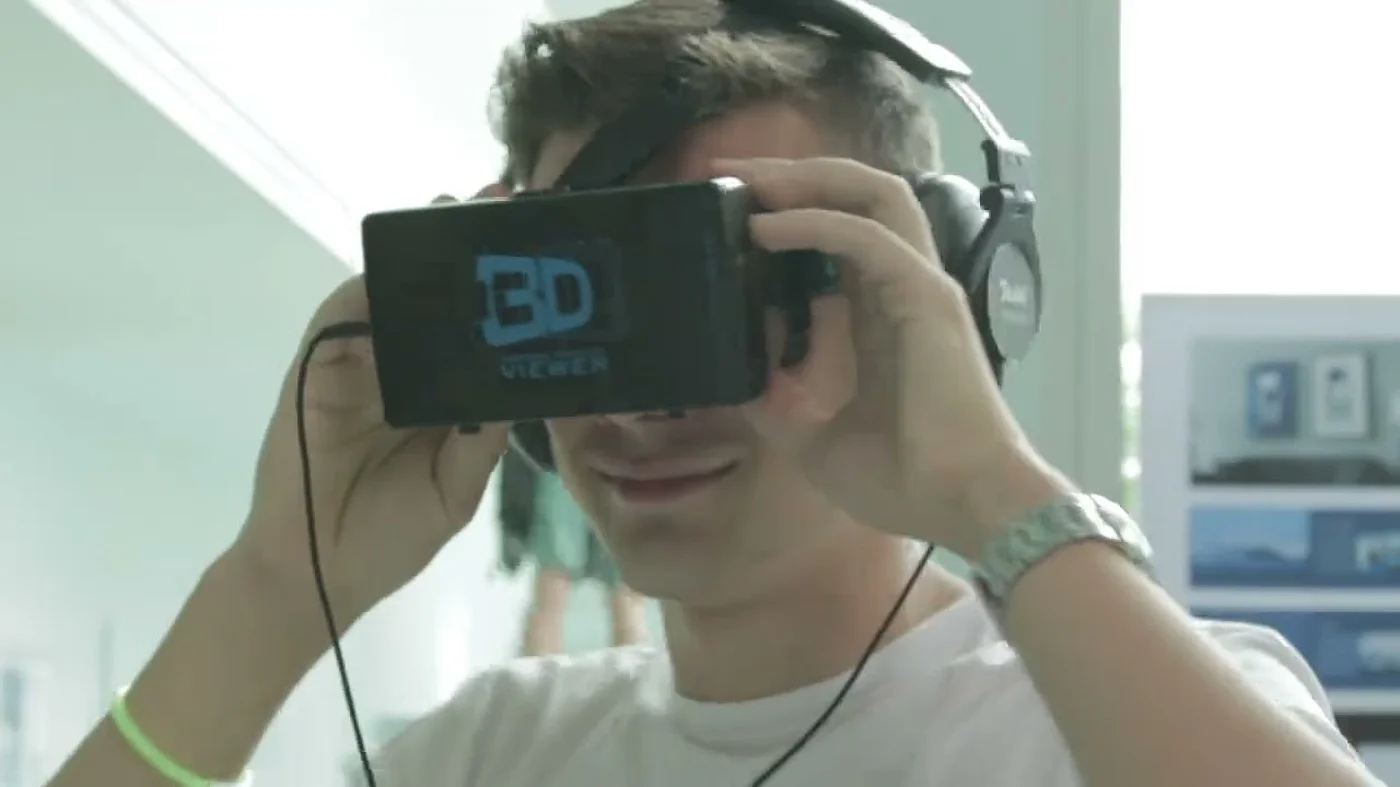
Here, you can try out and create a wide variety of Extended Reality (XR) applications and games, including Augmented Reality (AR), Mixed Reality (MR), and Virtual Reality (VR). In addition to high-performance computers, Oculus Rift, HTC Vive, and Nreal headsets are available. Both Unity and Unreal are installed on the computers, as well as 3D programs such as Maya and Blender.
Here you will find the studios of the department of Media and Information Studies, where courses for our students are held and applied research is conducted. Please select the studio you would like to learn more about from the list below.
Room D112
Tasks and Goals
Today, with computer-generated visual effects, anything is possible. If you can imagine it, you can bring it to the screen.
—Gabriel Campisi
Here, you can practice using 3D and VFX software packages and also use them to bring projects to life. Whether it’s keying, tracking, grading, or compositing—everything needed to create compelling visual effects can be explored here using Fusion and other programs. Set extensions and creatures are just as much a part of this as fog, distant galaxies, and sandstorms—Maya, Blender, and Houdini are also available for these purposes. 3D-animated short films are also created here, and those more interested in 2D animation will be in good hands at the Animation Studio, D005.
Room D005
Tasks and Goals
Production of animated films, motion graphics, and visualizations
(traditional animation, computer animation), visual effects (compositing, post-production), video games, experimental short films, audiovisual performances, and visual music.
Hardware
Traditional Animation
Stop-motion studio with two animation tables for sets equipped with panel lights, a motion-control dolly track, Dedolight lights, Kino-Flo and Desisti lights, as well as a cutout animation table, light tables, and digital cameras with special-effects tripods.
Green-screen studio with a cove, panel lights, and an attached workshop.
Computer Animation
Computer Animation Studio:
10 workstations with 30" and 22" monitors
1 stereoscopic 42" monitor for demonstration purposes—passive glasses
1 42-inch 4K screen for demonstrations
1 Wacom A3 graphics tablet
5 Wacom A4 graphics tablets
A4 flatbed scanner with transparency unit
2 Kinect and 2 Kinect 2 cameras for MoCap and similar depth-information-based applications
HTC Vive
Oculus Rift
Dedicated VR room for testing and development
Leap Motion sensor for hand motion tracking
Training room:
15 PCs that can be used together as a render farm.
Software
Autodesk Maya, 3ds Max, Mudbox)
Blender
SideFX Houdini
The Foundry NukeX, Nuke Studio
Clarisse IFX
Blackmagic Design Fusion
Blackmagic Design DaVinci Resolve 16
Toom-Boom Animate Pro
TV-Paint
Adobe Photoshop & After Effects
Resolume Arena
Unity/Unreal Engine
Serif Affinity Photo/Designer (as of Nov. '19)
Current Projects
Working in small teams, students conceive, produce, and present traditional, digital, and experimental animated films. Visual effects design for live-action films, the design of video games, and artistic exploration of VR/AR, VJing, and various forms of media art are integrated into the work in the studios and workshops. Animations are created in the 2nd/3rd and 5th–7th semesters as part of coursework, projects, or for a bachelor's degree or master's degree.
Projects Offered
Free choice of topic and technique; work begins after an individual discussion of the project and the creation of a storyboard.
Room D106/107
Tasks and Goals
Creative sound design for audio-only productions, moving images, and multimedia
The creation of an audio production from concept to presentation
Critical analysis of film scores and sound design.
Topic Selection
Style, eras, orchestration, idioms: the highs and lows of sound design
Introduction to sound editing and processing
All About Broadcasting: Designing a Program, Crafting a Segment
From Trailer to Teaser—Brevity Is the Soul of Wit
Silent Movies
Sound Effects
From Foley Artist to Digital Mega-Sound
Film (and Music) Analysis
Games, Edutainment
CD Presentations: Sound Design for Multimedia
Presentation
A film clip with music/sound design and analysis
Several clips for comparison
Notes on film (music) dramaturgy
Biographical information about the film composer
Room D002
Learning Objective
Gain practical experience with the fundamentals of film production
Course Content
Working in teams, students will carry out a complete film production from concept to post-production. The film’s topic is largely open-ended; everything from a trailer to an experimental film is permitted.
The specific topics covered are:
Idea, Concept
Screenplay, script, storyboard
Creating the production plan
Filming, lighting, and set design
Editing, visual effects
Post-production sound
Other post-production tasks
Regular support is provided to the film crews. However, the focus is on working independently.
Room D014
The grafik.werkstatt offers a variety of computer workstations (Linux, Mac OS, Windows) for graphic design, video editing, and VR. In addition to open-source programs such as GIMP and Inkscape, the grafik.werkstatt has Affinity licenses. At the grafik.werkstatt, the focus is equally on analog, hands-on work as well as computer graphics. A wide variety of equipment is available to students in the department. In addition to a printing press, screen printing machine, cutting plotter, and bookbinding machine, a wide range of materials—such as papers, films, and inks—are available for experimentation. Small-scale photo shoots can be carried out in a fully equipped photo studio, and photography equipment (cameras, lenses, tripods, etc.) is available for rent.
The department of Media at Hochschule Offenburg trains students who are equally at home in media technology and media informatics as they are in media business administration and the design of media products. Interdisciplinarity is the common thread linking all degree programs. The work culture in the department is open, collaborative, and team-oriented.
Competent, dedicated faculty members and the outstanding facilities in the new media building—including a studio wing, labs, and lecture halls—enable motivating, practice-oriented learning that prepares students for a wide range of careers in the media field. Teaching focuses on the conception and implementation of a wide variety of media products based on a solid theoretical foundation. The results of diverse research projects in areas such as IT security, e-learning, and eye tracking, as well as creative work in film, animation, audio, and graphic design, are directly incorporated into teaching, ensuring that the curriculum remains up-to-date.