
Biomechanik
Technology that moves people: In the Biomechanik program, you’ll combine engineering, medicine, and sports. You’ll develop smart implants, optimize prosthetics, and analyze movement patterns in professional sports. Your knowledge will translate into a better quality of life—through solutions that make a real difference in everyday life and in sports.

Profile
Degree
Bachelor of Engineering (B. Eng.)
Study Language
German
Standard period of study
7 Semester (inkl. 1 Praxissemester)
Starts of study
Winter semester
Application deadline
September 18
Admission requirements
General or technical university entrance qualification, technical college entrance qualification
ECTS
210 Credits
Place of study
Campus Offenburg
Do you have any questions about the application or enrollment process?
The team at the Zulassungsamt will be happy to assist you:
Phone: 0781 205-4792 (Mon–Thu 9:00 AM–12:00 PM, Tue 1:00 PM–3:00 PM)
In person: Room: A 007
Everything You Need to Know
Course Content
With a bachelor's degree in Biomechanik, you will learn to understand the human body as a highly complex system and to provide technical support for it.
Your program combines traditional engineering knowledge with a passion for sports and health.
Your path through the program:
Understanding mechanisms: Through Engineering Mechanics, Statics, and Kinetics, you’ll delve into the forces acting on the body and supporting systems. A central part of your studies is working at the IBMS—one of Europe’s largest and most modern biomechanical labs. Here, you’ll use high-end equipment such as 3D motion capture systems and force plates to scientifically analyze movement patterns in competitive and recreational sports as well as rehabilitation. You’ll also have access to scanning methods, 3D printers, and materials testing equipment.
Specialization: Choose Your Focus
Starting in the advanced study phase, you’ll deepen your knowledge in promising specializations that perfectly combine technology and sports:
Sports, Orthopedic, and Ergonomic Technology: Here, you’ll develop solutions for the human-machine interface. Whether it’s innovative prosthetics, orthoses for rehabilitation, or the ergonomic design of high-tech sports equipment—you’ll ensure that technology supports and protects human performance.
Bicycle Technology: Become an expert in modern mobility. This specialization focuses on bicycle dynamics, aerodynamics combined with ergonomics, and performance diagnostics. You’ll learn the fundamentals of lightweight construction for high-performance and e-bikes, as well as biomechanical interaction with the human body.
Designing solutions & optimizing systems: To actually build biomechanical systems, you’ll use engineering tools such as CAD and structural optimization applications, as well as simulation methods. You’ll work with innovative and 3D-printed materials and learn how to improve complex processes using numerical methods. Since your developments will directly support people later on, engineering psychology rounds out your profile.
Real-world challenges: You’ll spend your practical semester at a company of your choice—ranging from global players in the sporting goods industry to specialized medical technology firms. In the final biomechanics project, you’ll apply your knowledge to real-world problems: from enhancing performance in elite sports to optimizing bicycle components and designing ergonomic workplaces of the future.
Laboratories
Experience Biomechanics—Right from the Start
How does human movement work? And how can sports, health, and technology be combined? In our state-of-the-art labs, you’ll get to the bottom of these questions firsthand. Whether it’s motion analysis, performance diagnostics, biomechanics, or innovative measurement technology—here, theory comes to life. Discover the diverse laboratories of the Biomechanics program and gain insight into the hands-on training offered by our faculty.
Sports Biomechanics (IBMS)
This laboratory investigates the physical principles behind peak athletic performance and the human body’s capacity for physical stress. You will learn how mechanical forces affect the musculoskeletal system and how these forces can be used to optimize performance and prevent injuries.

Key topics of the lab exercises:
Force & Momentum: An Experimental Study of the Relationship Between Force and Momentum for the Analysis of Jumping, Starting, and Pushing Movements.
Ballistics: Calculation and analysis of ballistic projectile motion (e.g., trajectories), taking biomechanical parameters into account.
Exercise physiology: The study of the interaction between mechanical stress and the body's biological adaptation (exercise science).
Mechanics of Injury: Analysis of typical sports injuries to develop preventive training and protective strategies.
Methodology: Use of modern measurement technology to collect kinematic and kinetic data, as well as their computer-assisted analysis in the context of current research questions in training science.
Design Principles in Biomechanics
This laboratory combines traditional engineering with the requirements of medical technology. Its focus is on the digital development, virtual validation, and optimization of implants, prostheses, and biomechanical models.

In this lab, you’ll learn how modern biomechanical products and models are developed—from digital design and simulations to the analysis of complex biological data. You’ll work with professional software tools and gain an understanding of how technical solutions for medical and biomechanical problems are designed, calculated, and optimized.
CAD/CAE & Medical Modeling: Anatomically accurate design based on medical imaging data (CT/MRI) as well as computer-aided strength and material analyses (FEA) of medical devices.
Numerical Methods & Data Analysis: Mathematical processing of biological measurement data and the numerical solution of complex systems of equations to describe biomechanical processes.
Multibody Simulation (MKS): Development of musculoskeletal models to calculate joint forces and muscle moments that cannot be measured directly in humans through experimentation.
Methodology: Application of an end-to-end digital process chain—from the initial design through mathematical modeling to the dynamic simulation of the entire biological-technical system.
Specialized Materials Engineering and Structural Integrity
In this lab, you will investigate the relationship between a material’s internal structure and its external mechanical properties. You will learn how materials can be specifically modified using thermal processes and how to ensure their quality.


Key areas of the lab exercises:
Microstructural Analysis: Preparation of micro sections and light microscopic examination of microstructures to validate phase diagrams.
Mechanical materials testing: Determination of properties such as tensile strength, elongation at break, and hardness using tensile tests and notched impact tests.
Heat Treatment of Steels: Practical Implementation of Annealing and Hardening Processes, and Analysis of the Resulting Microstructural Changes (Iron-Carbon Phase Diagram).
Non-destructive testing (NDT): Detection of internal and external component defects using ultrasonic, X-ray, or magnetic particle testing without damaging the workpiece.
Methodology: Integrating theoretical materials science with industrial testing methods to evaluate component safety and material quality.
Human-Technology Interaction
This laboratory focuses on the interface between the user and the technical system. The goal is to design complex technology—particularly in medical and biomechanical contexts—in such a way that it remains intuitive, safe, and efficient to use.

Key topics of the lab exercises:
User-Centered Design: The development of user interface (HMI) concepts that are tailored to people's physical and cognitive abilities.
Usability & User Experience (UX): Practical evaluation of the usability of technical systems through systematic user testing.
Cognitive Ergonomics: Analysis of information intake and processing to prevent operating errors and reduce mental strain.
Interaction Technologies: Testing innovative interfaces such as eye tracking, gesture control, and virtual/augmented reality (VR/AR).
Methodology: Conducting participant studies and software-based analyses to quantify the quality of human-machine interaction.
Computer Science and Statistics
In the accompanying lab sessions, theory is put directly into practice. The goal is to develop a deep understanding of algorithmic thinking and clean software development.
Key topics of the lab exercises:
Coding & Algorithms: Translating logical processes into concrete programming examples.
Data Structures: Confident use of variables, data types, and complex structures.
Control Logic: Implementation of loops, functions, and modular program structures.
Software Quality: Practical Application of Documentation, Testing Procedures, and Code Validation.
Methodology: Solving real-world problems with a focus on translating mathematical models into executable software
Physics
The Physics work placement bridges the gap between mathematical models and the reality we experience. Here, you will validate the laws of nature through precise measurement techniques and learn to quantify physical phenomena.
Key areas of the practical sessions:
Mechanics & Dynamics: Experimental investigation of forces, laws of conservation of energy, and impact and rotational processes.
Waves & Acoustics: Measurement of oscillatory phenomena and sound waves, and investigation of the Doppler effect.
Optics: Practical experiments on ray optics (lens systems) and wave optics (interference and diffraction at a grating).
Structure of matter: Fundamental investigations into atomic models and the detection of radioactive radiation.
Methodology: Conducting systematic series of experiments, applying modern measurement techniques, and the statistical analysis and interpretation of results (error analysis).
Hands-On
To specialise in a specific area, students choose one of the following two practical placements:
Option A: Hands-on Mechanical Engineering Laboratory
This laboratory focuses on the practical application of traditional design elements and digital tools.
Mechanical components: Handling and assembly of bearings, gears, screws and other components.
Digitalisation: An introduction to the use of modern digital tools in mechanical engineering practice.
Practical relevance: Understanding the interaction of mechanical components within complex systems.
Option B: Process Engineering Toolbox
This laboratory teaches the essential basic operations of material conversion and separation.
Mechanical Process Engineering: Processes such as comminution, mixing or separation of materials.
Thermal Process Engineering: Fundamentals of heat transfer and thermal separation processes (e.g. distillation).
Chemical Process Engineering: Carrying out and analysing fundamental chemical reaction processes.
Perspectives
Biomechanical engineers bridge the gap between technology and people. Your advantage: You have a solid technical foundation combined with knowledge of human biology. This opens up many opportunities in growing markets:
Medical technology or rehabilitation companies: You develop smart implants or technical aids that make everyday life easier.
Sports and exercise science: In industry or research centers, you analyze movements and enhance athletes’ performance.
Ergonomics: You design products and workstations that are perfectly suited to the human body—for example, in the modern bicycle industry.
Healthcare interface: You’ll also apply your technical knowledge in physical therapy or rehabilitation centers to measurably improve therapies.
You can work in research, development, quality assurance, or sales. And you’ll use your skills to support people and improve their quality of life.
Fees and Funding
Semester Tuition and Fees
Hochschule Offenburg charges an administrative fee of 80.00 euros per semester and a social contribution of 65.00 euros for the Studierendenwerk Freiburg. In addition, the University’s student body charges all enrolled students a student body fee of 25.00 euros per semester to fulfill its responsibilities. Students on leave of absence from their studies are also required to pay these fees; however, foreign students enrolled on a temporary basis are exempt pursuant to Section 60(1), sentence 2, of the Higher Education Act (LHG).
= 170 euros per semester
Additional costs for PLUS Education degree programs (degree programs with a teaching certification option)
For students in the following bachelor's programs
Elektrotechnik/Informationstechnik PLUS Pädagogik
Mechatronik PLUS Pädagogik
Media Technology/Business PLUS Education
Wirtschaftsinformatik PLUS Pädagogik
an additional fee of 28.00 euros for local public transportation (semester ticket) applies, in accordance with the fees regulations of the Freiburg Studierendenwerk.
Note: You pay the semester fee to Hochschule Offenburg; however, you are enrolled at both Hochschule Offenburg and Freiburg University of Education.
Additional Costs for International Master's Programs
Students in international master's programs must also pay a flat-rate service fee of 150.00 euros per semester.
Tuition Fees for International Students and Students Pursuing a Second Degree
Since the 2017/18 winter semester, universities in the state of Baden-Württemberg have been charging international students tuition fees of 1,500.00 euros per semester and students pursuing a second degree 650.00 euros per semester.
You can find more information about these fees here:
https://www.landesrecht-bw.de/bsbw/document/jlr-HSchulGebGBWrahmen
http://www.bw-studyguide.de/en/studying/finance-and-funding.html
Exceptions to Tuition Fees for International Students:
According to Section 3 of the LHGebG, international students who are not citizens of an EU/EEA country and do not hold a German university entrance qualification are required to pay tuition fees. However, the law provides for a few exceptions.
To determine whether you are required to pay tuition fees, you can use the following information form and send it, completed and accompanied by the necessary supporting documents, to studiengebuehren@hs-offenburg.de:
Tuition Fee Information Form (PDF)
To apply for an exemption from tuition fees, please use the corresponding application form:
Application for Tuition Fee Exemption for International Students (PDF)
Application for Tuition Fee Exemption for a Second Degree Program (PDF)
Pursuant to Section 6, Paragraphs 4 and 5 of the LHGebG, Hochschule Offenburg may fully or partially exempt a limited number of international students from tuition fees if it deems them to be particularly gifted. The requirements, etc., are set forth in the bylaws governing tuition fee exemptions for international students based on exceptional talent. Students at the University can find more detailed information in the relevant announcement on the intranet.
BAföG
Information about BAföG is available on the website of the Federal Ministry of Education and Research. If you have any questions about BAföG, the Freiburg-Schwarzwald Studierendenwerk—which is responsible for Hochschule Offenburg—will also be happy to assist you under the “Money” section. You can submit applications for financial aid at the Studierendenwerk’s branch office on the Offenburg campus.
Studierendenwerk Branch Office
Badstraße 24, 77652 Offenburg
Phone: 0781 205-328
Office hours:
Mon and Wed from 9:00 a.m. – 12:00 p.m. and 1:30 p.m. – 3:30 p.m.,
as well as by telephone appointment
Here you’ll find a PDF in which we’ve summarized the criteria for what are known as “standard achievements”—the requirements you must demonstrate to continue receiving funding after two years of BAföG support.
Contact Person for M+V
Scholarships
A scholarship takes the financial pressure off you. Find the right support in our overview of scholarship programs.
Bewerbung
Would you like to submit an application for this degree program?
Applications will not be accepted again until the 2027/28 winter semester.
Would you like to find out now which documents you’ll need to submit for an application or later enrollment? You can find the relevant information in these two checklists:
Checklist for programs with admission quotas (PDF)
Checklist for programs without an admission cap (PDF)
We look forward to receiving your application or direct enrollment for the 2027/28 winter semester!
Do you have any questions about the application or enrollment process?
The team at the Zulassungsamt will be happy to assist you:
Phone: 0781 205-4792 (Mon–Thu 9:00 AM–12:00 PM, Tue 1:00 PM–3:00 PM)
In person: Room: A 007
From the Lecture Hall to the Streets: Innovative Training Solutions for Para-Cross-Country Skiing
In cooperation with the German Disabled Sports Association (DBS), Biomechanik students are developing innovative training solutions for para-cross-country skiing. For seated athletes, a special rolling frame enables realistic summer training. A new braking system has recently been developed that significantly increases safety at high speeds on asphalt. The project combines research, practical application, and inclusion in elite sports. More information is available here (PDF).

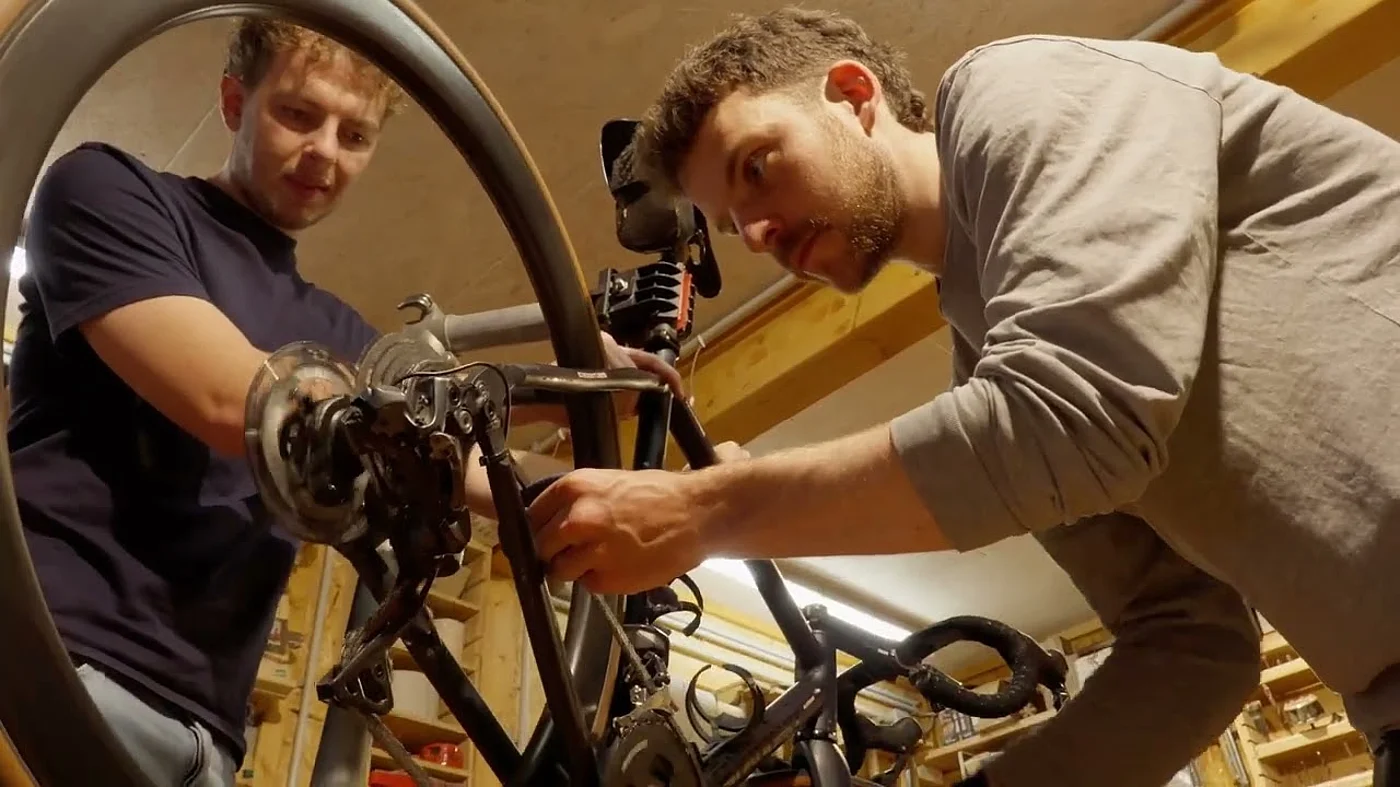
Highlights from the study program


Do you have any questions about the application or enrollment process?
The team at the Zulassungsamt will be happy to assist you:
Phone: 0781 205-4792 (Mon–Thu 9:00 AM–12:00 PM, Tue 1:00 PM–3:00 PM)
In person: Room: A 007
Contacts


