
Energie- und Gebäudetechnik
Want to do more than just talk about climate protection—want to put it into practice? In the bachelor's degree program in Energie- und Gebäudetechnik, you’ll develop solutions for the energy transition. You’ll learn how buildings are becoming smart and how we can make clever use of solar, wind, and hydrogen. Become a driving force behind energy systems and design the infrastructure of tomorrow.

Profile
Degree
Bachelor of Engineering (B. Eng.)
Study Language
German
Standard period of study
7 Semester (inkl. 1 Praktikumssemester)
Starts of study
Winter semester
Application deadline
September 18
Admission requirements
General or technical university entrance qualification, technical college entrance qualification
ECTS
210 Credits
Place of study
Campus Offenburg
Do you have any questions about the application or enrollment process?
The team at the Zulassungsamt will be happy to assist you:
Phone: 0781 205-4792 (Mon–Thu 9:00 AM–12:00 PM, Tue 1:00 PM–3:00 PM)
In person: Room: A 007
Everything You Need to Know
Course Content
You’ll explore how buildings can be sustainably powered, technically equipped, and operated efficiently. To do this, you’ll combine engineering knowledge with climate protection, digitalization, and modern building services engineering.
Mastering the basics: You’ll start with mathematics, physics, and electrical engineering. These are your tools for everything that lies ahead.
Understanding Energy: You’ll explore how we generate, store, and intelligently distribute energy—from photovoltaics to hydrogen storage.
Rethinking buildings: Discover how modern building physics and HVAC technology make buildings efficient and comfortable.
Leveraging digital tools: Using measurement technology, data science, simulation, and control engineering, you’ll optimize complex systems and boost efficiency.
Economics & Sustainability: You’ll learn to evaluate technical solutions from both environmental and economic perspectives. For a truly circular economy.
Applying Knowledge: During your practical semester and through projects, you’ll work on real-world challenges and build connections with companies.
In the later semesters, you’ll set your own areas of focus: for example, in plant engineering, energy supply, building automation, or cutting-edge technologies of the future.
By the way: With the RIZ Energie - Research and Innovation Center of Energy Technology, you’ll have access to a state-of-the-art laboratory facility for both theory and practice.
Laboratories
Applying knowledge, developing solutions, shaping the future: in the practical modules, you put your knowledge directly into practice. You experiment, measure, simulate and analyse real-world systems – from energy supply to building automation. In doing so, you learn how sustainable and efficient solutions for the buildings of tomorrow are developed. The state-of-the-art RIZ Energie centre provides you with the ideal conditions for both theory and practice.
Building physics
Profile and Objectives
The design of sustainable and climate-friendly building concepts offering the highest level of thermal comfort requires an understanding of the fundamental principles of building physics. In the Building Physics Laboratory, we focus on the metrological investigation and assessment of building components and rooms.
Heat transfer at the façade
Temperatures and humidity in rooms
Thermal inertia of a room
Operational behaviour in winter and summer
Heating and cooling via thermal building component activation
Simulation model for buildings and heat transfer systems

Practical sessions and exercises
A double climate chamber, comprising two test rooms with an adjoining climate chamber, is fitted with various external wall elements and is heated or cooled using tailored operating concepts. We use a range of measurement methods and instruments to determine temperatures, humidity and air movements. Using the measurement data obtained, we evaluate the properties and behaviour of building components and rooms.
As a group, we carry out a total of three laboratory experiments in the double climate chamber, and a fourth laboratory experiment on the computer:
Metrological investigations into thermal comfort
Thermal and hygrometric behaviour and energy balance in winter
Thermal and hygrometric behaviour in summer and summer heat protection
Simulation-based analysis of the measurement data
Renewable energy systems
Profile and Objectives
In the ‘Renewable Energy Systems’ practical course, students gain an understanding of key technologies involved in the energy transition through hands-on experiments. The focus is on photovoltaics, wind energy and the simulation of renewable energy systems.
Using state-of-the-art teaching systems, students investigate the electrical behaviour of solar modules, the design and operation of photovoltaic systems, and the functioning and control of modern wind turbines. In addition, they plan and optimise real-world PV systems using professional simulation software.
Furthermore, selected experiments and projects can be carried out on the microgrid at the Institute for Sustainable Energy Systems (INES). The course is complemented by introductory modelling and analysis tasks in Python, which facilitate the transition to modern methods of energy system simulation.

Practical sessions and exercises
Photovoltaics: characteristic curves, solar irradiance, module connection, and grid-connected and off-grid operation
Wind energy: design, control and operation of modern wind turbines
Simulation and design of PV systems
Practical work on the INES microgrid
Modelling and analysis of energy systems using Python
About the laboratory
The laboratory is equipped with state-of-the-art teaching and simulation systems for photovoltaics and wind energy, as well as professional software tools for the planning and evaluation of renewable energy systems. The equipment is complemented by modern measurement and automation technology. Through the Institute for Sustainable Energy Systems (INES), students also gain insights into current research infrastructures such as microgrids, smart grids and digital energy management systems.
Hands-On
Profile and Objectives
The Hands-On Laboratory offers first-semester students the opportunity to gain practical experience with key components and machine elements. In the individual experiments, students assemble pipe assemblies and dismantle and examine bicycle hubs. The laboratory combines practical work with an introduction to key theoretical concepts, which are explored in greater depth later in the course.

Practical sessions and exercises
Pipe Joints Experiment
In this experiment, various pipe sections are assembled using different joining techniques. This includes a pipe run made of steel pipes joined using flanges. In addition, practice sections are constructed using galvanised steel pipes with screw-in connections, as well as hydraulic lines with compression fittings. These pipe sections are then tested for leaks using a test pump. During the laboratory session, students learn about the properties and the advantages and disadvantages of the individual pipe and connection techniques.
Actuator Experiment
This laboratory experiment examines a rotary actuator for pipeline valves. After dismantling, the function of the key components is assessed and a roller bearing is replaced. This provides students with practical insight into the topics of bearings and shafts.
Bicycle Hub Experiment
The experiment focuses on a 3-speed bicycle hub, which is dismantled and reassembled. Once dismantled, the components relevant to the gear-changing process are identified and their function in conjunction with the other components is determined. Students thus gain practical experience in the field of gearboxes and gear ratios.
Heating technology
Profile and Objectives
How can heat be generated as efficiently and sustainably as possible in a heating system, distributed throughout a building in line with demand, and ultimately delivered to the rooms? In the Heating Technology Laboratory, this is precisely what is investigated, measured and evaluated in a practical context.
Functionality and operational behaviour of heating components and systems
Determination of heating performance indicators
Part-load behaviour of heating systems
Measurement and control technology for heating systems
The importance of proper design planning and implementation (heating load, heating surface dimensioning, pipework network calculation, hydraulic balancing, control concept)


Practical sessions and exercises
Using various heat generators, a heat distribution network with connected heating surfaces and a hydraulic test rig, we carry out a total of four laboratory experiments as a group:
Efficiency and utilisation cycles of various heat generators
Thermal behaviour of a heating system
Part-load behaviour in a closed hydraulic system
Hydraulic balancing in a heating system
Air-conditioning technology
Profile and Objectives
Sustainable and future-proof buildings provide a high level of thermal and acoustic comfort alongside excellent air quality. This is precisely what we investigate and evaluate in the Laboratory for Indoor Air and Air-Conditioning Technology. We also carry out standard-compliant acceptance testing and measurements on ventilation systems.
Commissioning of ventilation and air-conditioning systems with regard to draught-free operation, temperature distribution, acoustics and indoor air quality.
Application of measurement technology as part of technical acceptance testing, in particular air temperatures, air velocities, turbulence levels, relative humidity and sound
Assessment of measured values and parameters in indoor air and air-conditioning technology
Assessment of indoor air flows, in particular using visualisation techniques such as smoke


Practical sessions and exercises
We operate an air-conditioning system with an attached test chamber and investigate and evaluate indoor air flow in air-conditioned rooms under realistic conditions, taking into account energy efficiency and thermal comfort. To this end, we utilise the heating, cooling, humidification and dehumidification functions of the full-range air-conditioning system. By applying various methods for measuring air volume flow, we assess their quality and areas of application.
As a group, we carry out a total of four laboratory experiments:
Commissioning of an air-conditioning system
Air flow rate measurement
Indoor air flow
Operation and energy balance of an air-conditioning system
Measurement data acquisition
Profile and Objectives
You will learn how to record measurement data automatically, create simple measurement programmes for this purpose, and configure the equipment parameters accordingly. In doing so, you will select appropriate measurement settings and set up small measurement chains to gain practical experience of various measurement systems. The measurement data will then be presented and analysed in a meaningful way, for example through visualisation and statistical analysis. You will also familiarise yourself with different types of sensors, their characteristics and possible applications.

Practical sessions and exercises
In the laboratory, you will find an experimental setup with a measurement chain that is either partially or fully assembled, along with a data logger and a computer. To enable you to work with this equipment, a software induction will be provided in advance. Furthermore, the tasks are designed to allow you to familiarise yourself with the respective measurement system and the components of the measurement chain step by step. Your tasks may then cover the following subject areas:
Recording the characteristic curve of a measuring orifice in an air flow
Measuring the power characteristic curve of a solar cell
Measuring the strain of a bending beam
Measuring speed and voltage on a generator
Analysing bearing reactions of an unbalanced shaft
This involves dealing with quantities such as volume flow, pressure, current, voltage, strain, force, rotational speed and vibrations. In addition, temperature measurements using resistance thermometers or thermocouples complement some of the topics listed.
The skills taught also include working with manuals and data sheets in order to independently identify relevant specifications or settings and enter them into the measurement system.
Physics
Control Engineering
Profile and Objectives
As part of the Control Engineering Laboratory, various delay elements are described mathematically and analysed using measurement techniques. The transfer behaviour under step and periodic excitation is investigated, and the system parameters are determined. Students learn how to use Bode plots and locus curves in a practical context. Furthermore, the course covers the fundamentals of the structure and operation of automation systems, whilst demonstrating the practical procedure for parameterising PID controllers. The laboratory experiments are also modelled in MATLAB/Simulink, and the results of the models are compared with those of the actual experiments.
Practical sessions and exercises
The laboratory course comprises five days of experiments, during which the following experiments will be carried out:
Investigation of a first-order thermal delay element in response to a step change in ambient temperature, followed by a graphical analysis of the step response.
Investigation of a second-order mechanical delay element under dynamic excitation. A Bode plot and a locus must be drawn from the measurement results.
An unknown electrical circuit is investigated using measurement techniques, and a model-based system analysis is carried out.
A PID controller is to be iteratively tuned via a process control system in order to compensate as quickly as possible for the control error in a loop with a long dead time.
The laboratory experiments are modelled using MATLAB/Simulink, and a computer-aided system analysis and controller design are carried out.
Simulation and Optimization
The Simulation and Optimization Lab is a computer lab, meaning it takes place in the computer lab. Students develop the practical skills needed to implement models from various fields of energy, building, and environmental engineering using relevant simulation software such as Python and Simulink. The simulation results are processed, visualized, and discussed.

Lab Sessions and Exercises
Following an introduction to the simulation software used (Python, Simulink), computer simulations will be conducted on the following topics, among others:
Agitated-tank reactors at various levels of complexity, e.g., isothermal vs. thermal
Electric vehicles with various components such as the battery system, electric motor, and Newton’s laws of motion
Linear optimization (e.g., production planning) and nonlinear optimization (e.g., PV system with storage)
Perspectives
One thing is clear: After completing your studies, you’ll be prepared to develop sustainable energy concepts, plan technical building systems, and implement innovative solutions for the energy supply of tomorrow.
Your areas of focus:
Planning: Design energy-efficient building systems and modern energy supply concepts.
Development: Design systems for renewable energy sources such as solar or wind power.
Consulting & Optimization: Help municipalities and companies reduce their environmental footprint.
Project Management: Oversee the technical implementation of large-scale infrastructure projects for the energy transition.
Fees and Funding
Semester Tuition and Fees
Hochschule Offenburg charges an administrative fee of 80.00 euros per semester and a social contribution of 65.00 euros for the Studierendenwerk Freiburg. In addition, the University’s student body charges all enrolled students a student body fee of 25.00 euros per semester to fulfill its responsibilities. Students on leave of absence from their studies are also required to pay these fees; however, foreign students enrolled on a temporary basis are exempt pursuant to Section 60(1), sentence 2, of the Higher Education Act (LHG).
= 170 euros per semester
Additional costs for PLUS Education degree programs (degree programs with a teaching certification option)
For students in the following bachelor's programs
Elektrotechnik/Informationstechnik PLUS Pädagogik
Mechatronik PLUS Pädagogik
Media Technology/Business PLUS Education
Wirtschaftsinformatik PLUS Pädagogik
an additional fee of 28.00 euros for local public transportation (semester ticket) applies, in accordance with the fees regulations of the Freiburg Studierendenwerk.
Note: You pay the semester fee to Hochschule Offenburg; however, you are enrolled at both Hochschule Offenburg and Freiburg University of Education.
Additional Costs for International Master's Programs
Students in international master's programs must also pay a flat-rate service fee of 150.00 euros per semester.
Tuition Fees for International Students and Students Pursuing a Second Degree
Since the 2017/18 winter semester, universities in the state of Baden-Württemberg have been charging international students tuition fees of 1,500.00 euros per semester and students pursuing a second degree 650.00 euros per semester.
You can find more information about these fees here:
https://www.landesrecht-bw.de/bsbw/document/jlr-HSchulGebGBWrahmen
http://www.bw-studyguide.de/en/studying/finance-and-funding.html
Exceptions to Tuition Fees for International Students:
According to Section 3 of the LHGebG, international students who are not citizens of an EU/EEA country and do not hold a German university entrance qualification are required to pay tuition fees. However, the law provides for a few exceptions.
To determine whether you are required to pay tuition fees, you can use the following information form and send it, completed and accompanied by the necessary supporting documents, to studiengebuehren@hs-offenburg.de:
Tuition Fee Information Form (PDF)
To apply for an exemption from tuition fees, please use the corresponding application form:
Application for Tuition Fee Exemption for International Students (PDF)
Application for Tuition Fee Exemption for a Second Degree Program (PDF)
Pursuant to Section 6, Paragraphs 4 and 5 of the LHGebG, Hochschule Offenburg may fully or partially exempt a limited number of international students from tuition fees if it deems them to be particularly gifted. The requirements, etc., are set forth in the bylaws governing tuition fee exemptions for international students based on exceptional talent. Students at the University can find more detailed information in the relevant announcement on the intranet.
BAföG
Information about BAföG is available on the website of the Federal Ministry of Education and Research. If you have any questions about BAföG, the Freiburg-Schwarzwald Studierendenwerk—which is responsible for Hochschule Offenburg—will also be happy to assist you under the “Money” section. You can submit applications for financial aid at the Studierendenwerk’s branch office on the Offenburg campus.
Studierendenwerk Branch Office
Badstraße 24, 77652 Offenburg
Phone: 0781 205-328
Office hours:
Mon and Wed from 9:00 a.m. – 12:00 p.m. and 1:30 p.m. – 3:30 p.m.,
as well as by telephone appointment
Here you’ll find a PDF in which we’ve summarized the criteria for what are known as “standard achievements”—the requirements you must demonstrate to continue receiving funding after two years of BAföG support.
Contact Person for M+V
Scholarships
A scholarship takes the financial pressure off you. Find the right support in our overview of scholarship programs.
Application
Would you like to submit an application for this degree program?
Applications will not be accepted again until the 2027/28 winter semester.
Would you like to find out now which documents you’ll need to submit for an application or later enrollment? You can find the relevant information in these two checklists:
Checklist for programs with admission quotas (PDF)
Checklist for programs without an admission cap (PDF)
We look forward to receiving your application or direct enrollment for the 2027/28 winter semester!
Application for Higher Semesters / Transfer Admission
Your Application, Step by Step
Application period begins: April 29, 2026
Step 1: Sign-up/Registration and Online Application
First, log in to our portal to complete your application online. There are two ways to do this:
Are you already a student here? Then you don’t need a new account. Just log in at the top right using your existing student account. Under the “Application” menu item, you can select your desired program directly.
Are you new to Hochschule Offenburg? Then first register on our applicant portal. You will receive an email with your password—please keep this in a safe place. Once you have confirmed your access, you can fill out your application online and submit it directly.
Then print out the application and the privacy policy and sign both.
Step 2: Submit your documents
Send us the signed application and the signed privacy policy along with the other documents by mail. You can see exactly which documents we need in the checklist (German, pdf).
Very important: Please be sure to include a current transcript of your academic performance (showing passed, failed, and definitively failed exams).
Want to change your major?
If you have already studied for at least 3 semesters, you must consult with an academic advisor before submitting an application for a higher semester.
Get in touch: Ask the Student Secretariat who chairs the examination board for your desired program.
Get advice: Schedule a meeting with the appropriate person.
Submit proof: Bring the printed consultation form (German, pdf) to the meeting and include the signed proof with your application afterward.
Please send the documents to the following address:
Hochschule Offenburg
Admissions Office
Badstraße 24
77652 Offenburg
Checklist (German, pdf)
for Bachelor's Degree Application
Important information for you:
Orientation Test: Please remember to take an orientation test before enrolling. You can find more information here: Academic Orientation.
Check your status: After you’ve submitted your application, you can log in to the applicant portal at any time to see how far along we are in processing it. There you’ll also find out if we need anything else from you.
Transferring credits: You should only apply for the official transfer of your previous academic credits after you have enrolled. You can find out exactly how this works at your Student Secretariat.
Do you have any questions about the application or enrollment process?
The team at the Zulassungsamt will be happy to assist you:
Phone: 0781 205-4792 (Mon–Thu 9:00 AM–12:00 PM, Tue 1:00 PM–3:00 PM)
In person: Room: A 007
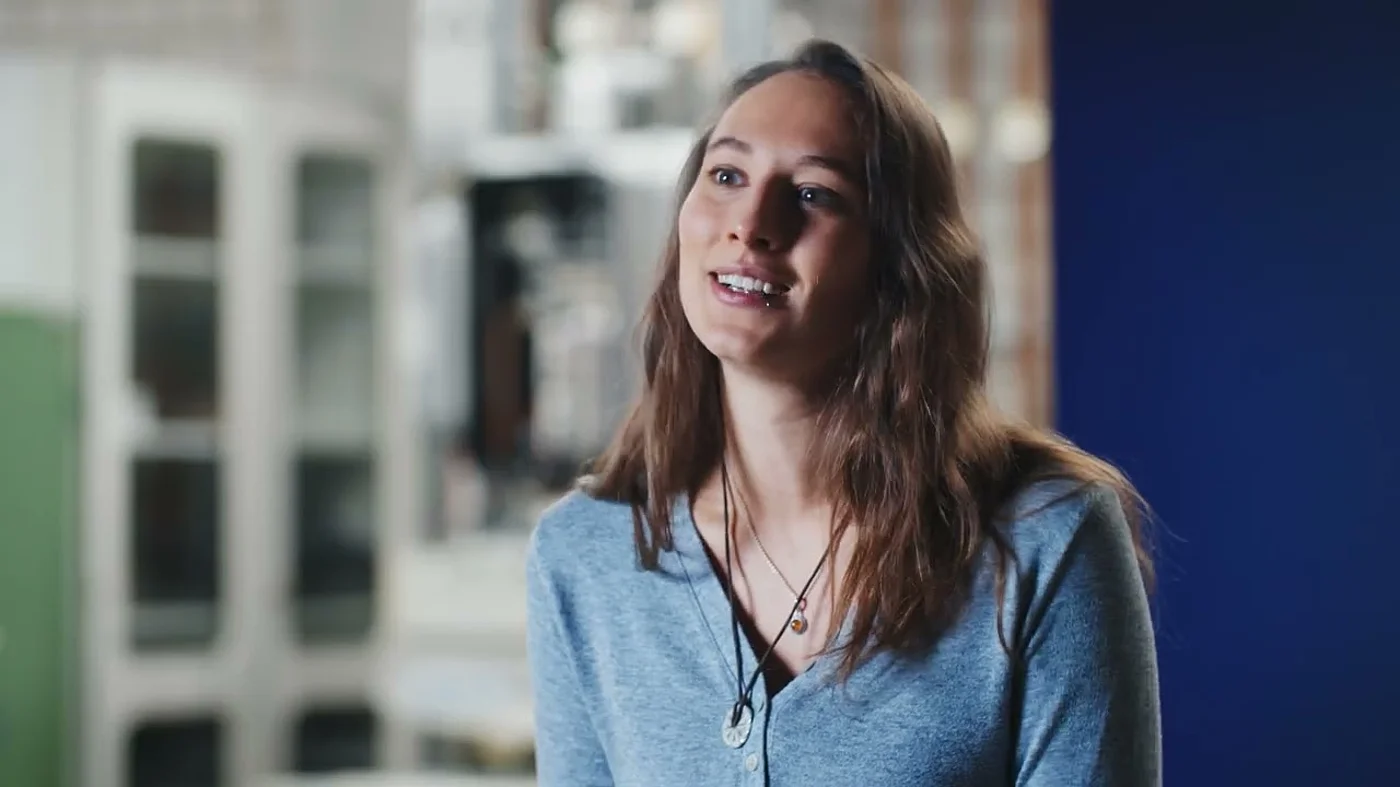
Highlights from the study program


Do you have any questions about the application or enrollment process?
The team at the Zulassungsamt will be happy to assist you:
Phone: 0781 205-4792 (Mon–Thu 9:00 AM–12:00 PM, Tue 1:00 PM–3:00 PM)
In person: Room: A 007
Contacts

